Why did my ice maker stop making ice all of a sudden?
That can happen because of temperature, water flow, a problem in the ice-making mechanism, or a larger refrigerator issue affecting the whole system.
Homeowner Knowledge Center
People often brush this one off at first. It is just the ice maker, after all. Then a few days later the freezer seems softer than usual or the drinks never really get cold, and now it is clear the ice problem may have been the early warning.
Sometimes the ice maker is the only thing acting up. Sometimes it is the easiest-to-spot symptom of a refrigerator that is not holding the right temperature or moving water the way it should.
Start here
If the ice bin is suddenly empty, cubes are tiny, or the ice maker stopped after a recent warm-up or filter change, the problem may be tied to temperature, water flow, the ice maker itself, or a larger refrigerator issue. The main question is whether this is an isolated convenience problem or the first clue that the whole refrigerator is starting to struggle.
Transparent service
The $89 service call, repair credit, warranty terms, and scheduling expectations should be clear before we begin.
Step 1
The $89 service call includes diagnosis of the appliance problem.
Step 2
If you proceed with the repair, the $89 is credited toward the repair total. You do not pay it twice.
Step 3
You receive the repair price before work begins.
Step 4
Repairs include a 90-day labor warranty and a 1-year warranty on installed OEM or equivalent-quality parts.
Step 5
We offer same-day appointments when scheduling and parts availability allow.
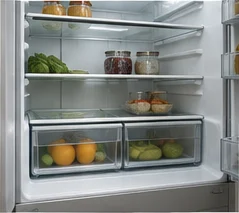
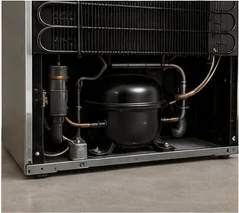
The bin is empty, production slows way down, cubes come out much smaller than normal, or the dispenser suddenly stops giving ice.
Temperature problems, water-flow issues, ice-maker component trouble, and refrigerator performance issues can all show up as an ice complaint first.
If the ice maker stopped around the same time the freezer softened or the fresh-food section warmed up, this may not be just an ice-maker problem.
Sometimes the ice maker simply stops producing new ice. Other times it keeps working poorly for a while first, with hollow cubes, tiny cubes, or clumps that tell you the process is off somewhere.
Notice whether the dispenser still works, whether the freezer feels colder than the refrigerator section, and whether the issue started after changing the filter or after a brief power interruption. That context helps.
Check whether the ice maker was switched off accidentally and whether the freezer door is sealing normally. If your model uses a replaceable water filter, it also helps to note when that was last changed.
If the ice bucket is frozen into a solid clump or the freezer seems warmer than usual, do not force parts or start prying things loose aggressively. The goal is to observe what changed, not break plastic trying to outsmart the appliance.
If the ice maker issue is paired with weak cooling, thawing food, or heavy frost, stop thinking of it as just a convenience problem. At that point the refrigerator itself may need attention.
Even if the rest of the unit seems okay, repeated no-ice or low-ice complaints usually mean there is a real issue worth diagnosing instead of endlessly resetting the mechanism.
Many ice-maker complaints still land squarely in repair territory. If the rest of the refrigerator is doing its job, the problem may be limited to one part of the ice system or water delivery path.
Replacement becomes a more serious conversation when the refrigerator has broader cooling issues, repeated breakdowns, or age-related problems stacked on top of the ice complaint.
The useful story is what the ice maker did before it quit. Did output slow down? Did cube size change? Did the freezer warm up too? Those details can point the visit in the right direction right away.
Once the problem is identified, it is much easier to tell whether this is a focused repair or part of a larger refrigerator decision.
That can happen because of temperature, water flow, a problem in the ice-making mechanism, or a larger refrigerator issue affecting the whole system.
Yes. Tiny or hollow cubes can be a clue that water flow or freezing conditions are not where they should be.
A reset may tell you whether the unit responds, but it does not explain why the problem started. If the issue comes right back, the real cause is still there.
Call when the ice issue keeps returning, the freezer also seems off, or the refrigerator is showing other cooling symptoms along with the no-ice complaint.
Use these links when you want more detail about a specific appliance, city, or repair question.
Start with the appliance overview, service area, and how to ask for service.
If your refrigerator is running but not getting cold, leaking water, frosting over, or making a new noise, the problem may involve airflow, defrost parts, fans, drains, controls, or another component that needs diagnosis. Premier Appliance Repair helps homeowners throughout our service area request service for common residential refrigerator problems.
If your dishwasher leaves dishes dirty, keeps standing water in the bottom, leaks onto the floor, smells bad, or refuses to start correctly, the problem may involve drainage, wash performance, the door, or the controls. Premier Appliance Repair helps homeowners throughout our service area request service for common residential dishwasher problems.
Premier Appliance Repair serves Rockwall homeowners with residential appliance repair for refrigerators, washers, dryers, dishwashers, ovens, ranges, and other common household appliances. Same-day service is available in most cases, and the easiest way to get moving is to send the symptom, the address, and the best number to reach you.
Premier Appliance Repair serves Dallas homeowners with residential appliance repair for refrigerators, washers, dryers, dishwashers, ovens, and other common household appliances. Same-day service is available in most cases, and the request process is built around getting you from “this thing quit working” to a clear next step without a lot of wasted back-and-forth.
Premier Appliance Repair provides residential appliance repair in Plano for kitchen and laundry appliances, including refrigerators, dishwashers, washers, dryers, ovens, and ranges. Same-day service is available in most cases, and homeowners can send the problem details online or call to confirm the best available appointment.
Send the appliance details, service address, and preferred contact method so Premier Appliance Repair can follow up with the best available scheduling option.