Why is my washer not spinning but still washing?
A washer can still fill and agitate while failing at the part of the cycle that drains or spins the load properly.
Homeowner Knowledge Center
Most people discover this while they are already in the middle of something else. You move a load to the dryer and realize the clothes are still soaked. Now laundry day has stalled out, the washer smells like wet towels, and you are wondering whether one restart will fix it.
Sometimes it is a one-load issue. Sometimes it is the warning sign that the washer has started failing in a way that will keep coming back. The difference usually shows up in what the machine did before it stopped and what it does when you try again.
Start here
If the cycle ends and the clothes are still sitting in heavy, dripping water, the washer may have a balance problem, lid or door issue, drainage trouble, or another mechanical fault that prevents the spin cycle from finishing properly. The first job is figuring out whether the machine is simply out of balance or whether it is stuck in a bigger failure that will keep happening.
Transparent service
The $89 service call, repair credit, warranty terms, and scheduling expectations should be clear before we begin.
Step 1
The $89 service call includes diagnosis of the appliance problem.
Step 2
If you proceed with the repair, the $89 is credited toward the repair total. You do not pay it twice.
Step 3
You receive the repair price before work begins.
Step 4
Repairs include a 90-day labor warranty and a 1-year warranty on installed OEM or equivalent-quality parts.
Step 5
We offer same-day appointments when scheduling and parts availability allow.
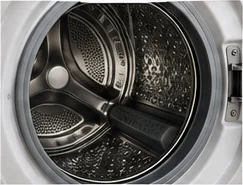
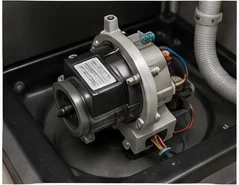
The cycle finishes, but the clothes are much heavier than they should be, there is standing water in the drum, or the washer gave up before the final spin.
Possible reasons include a load that shifted badly, a drainage problem, a lid or door issue, a worn mechanical part, or controls that are no longer sending the washer through the full cycle.
If the washer keeps leaving clothes soaked, is banging hard, or stops mid-cycle repeatedly, more test loads usually do not make the problem smaller.
Sometimes the washer sounds like it tried to spin and gave up. Sometimes it fills and drains, but never gets the clothes dry enough for a normal dryer cycle. Sometimes the machine thumps so hard you know something is off before you even open the lid.
Pay attention to whether the tub still has water, whether the door stayed locked longer than normal, and whether the problem happened with one bulky load or with everything you wash. Those details help sort out a one-time balance issue from a repeat repair problem.
If the load is badly bunched on one side, pause and redistribute it before trying again. Check whether the washer is level enough that it is not rocking. Also notice whether the drain hose looks kinked or whether the machine seems to be holding water at the end.
If the washer is flashing a code, write it down. If it smells hot, makes a sharp grinding noise, or refuses to unlock properly, stop there. Those are not signs to keep experimenting through three more cycles.
Do not keep using the washer as if it is mostly fine if it is leaving water in the tub, slamming around violently, or failing the spin cycle on normal loads. That can turn a repair problem into water damage, moldy laundry, or a machine that becomes even less predictable.
If school clothes, work uniforms, or weekend towels are piling up, it is usually better to move on from guesswork and get the issue diagnosed.
A washer that will not spin is not automatically replacement territory. Many of these calls come down to a part failure that is fixable, especially when the machine otherwise washes normally and the problem is fairly sudden.
Replacement makes more sense when the washer is older, has multiple problems stacked together, or the repair cost is hard to justify against the age and condition of the machine. That is easier to judge after the real cause is clear.
The useful details are the ones you noticed during a real load. Did it stop full of water? Did it bang during spin? Did it leave clothes wet even though the timer reached the end? That homeowner description sets the direction quickly.
Once the failure is diagnosed, you can decide whether the repair is worth doing now or whether it is time to consider replacement before the next laundry backup hits.
A washer can still fill and agitate while failing at the part of the cycle that drains or spins the load properly.
Yes. Some washers will slow down or stop the spin cycle if the load shifts badly enough, especially with heavy blankets, towels, or small mixed loads.
It is reasonable to try once after redistributing the load, but if the washer repeats the same problem, that points to something beyond a simple one-load issue.
Call when the washer keeps leaving clothes soaked, will not drain and spin together, or starts making the kind of noise and movement that tells you the cycle is not finishing normally.
Use these links when you want more detail about a specific appliance, city, or repair question.
Start with the appliance overview, service area, and how to ask for service.
If your washer will not spin, will not drain, keeps stopping mid-cycle, or leaves clothes soaked at the end, the problem may involve drainage, balance, door, pump, control, or other mechanical parts that need diagnosis. Premier Appliance Repair helps homeowners throughout our service area request washer repair with a clear next step.
If your dryer takes forever, tumbles without heat, shuts off too soon, or starts making a new squeal or thump, the problem may involve airflow, heating parts, sensors, or worn mechanical components. Premier Appliance Repair helps homeowners throughout our service area request service for common residential dryer problems.
Premier Appliance Repair serves Rockwall homeowners with residential appliance repair for refrigerators, washers, dryers, dishwashers, ovens, ranges, and other common household appliances. Same-day service is available in most cases, and the easiest way to get moving is to send the symptom, the address, and the best number to reach you.
Premier Appliance Repair serves Dallas homeowners with residential appliance repair for refrigerators, washers, dryers, dishwashers, ovens, and other common household appliances. Same-day service is available in most cases, and the request process is built around getting you from “this thing quit working” to a clear next step without a lot of wasted back-and-forth.
Premier Appliance Repair provides residential appliance repair in Plano for kitchen and laundry appliances, including refrigerators, dishwashers, washers, dryers, ovens, and ranges. Same-day service is available in most cases, and homeowners can send the problem details online or call to confirm the best available appointment.
Send the appliance details, service address, and preferred contact method so Premier Appliance Repair can follow up with the best available scheduling option.