How do I know if an appliance is worth repairing?
Look at what failed, how well the appliance has been working lately, and whether this is one focused issue or part of a bigger pattern of decline.
Homeowner Knowledge Center
Homeowners usually ask this question after the appliance has already made life harder for a while. The refrigerator cooled poorly last month and now it is warming up again. The washer has been noisy for weeks and finally left a load sitting in water. The oven started heating unevenly before it stopped heating at all.
That is why the right question is not just "how old is it?" The better question is what kind of failure happened, whether the appliance has otherwise been dependable, and whether a repair solves the real problem instead of only buying a little time.
Start here
There is no honest one-size-fits-all rule for repair versus replacement. A ten-year-old appliance is not automatically finished, and a newer one is not automatically worth saving. The decision usually comes down to what failed, how the appliance has been performing lately, what the repair would realistically accomplish, and how much disruption your household can absorb if you keep limping along.
Transparent service
The $89 service call, repair credit, warranty terms, and scheduling expectations should be clear before we begin.
Step 1
The $89 service call includes diagnosis of the appliance problem.
Step 2
If you proceed with the repair, the $89 is credited toward the repair total. You do not pay it twice.
Step 3
You receive the repair price before work begins.
Step 4
Repairs include a 90-day labor warranty and a 1-year warranty on installed OEM or equivalent-quality parts.
Step 5
We offer same-day appointments when scheduling and parts availability allow.
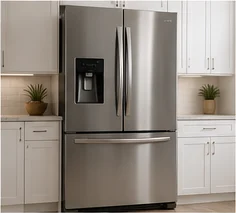
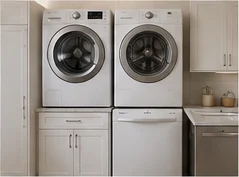
Repeated breakdowns, poor overall performance, and a repair cost that feels too close to the appliance's remaining value are all signs to look harder at replacement.
If the appliance has been dependable and one focused failure knocked it out, repair often makes better sense than people expect.
Do not replace a machine just because it failed once, and do not keep sinking money into one that has been warning you for a long time without stepping back to look at the whole pattern.
Start with the symptom and the recent history. Did the appliance fail suddenly after working fine, or has it been getting louder, slower, warmer, leakier, or less reliable for months? The answer changes the conversation.
A washer that has done its job for years and suddenly will not spin is different from a washer that has been leaving clothes wet, walking across the floor, and making noise every other week. One focused problem is not the same as a machine in steady decline.
Repair is often the better move when the appliance fits your home, the overall condition is still decent, and the failure is tied to one specific part or system. That is especially true when the appliance has been dependable up to this point.
A lot of homeowners assume an older unit is automatically a money pit. Sometimes that is true. Sometimes replacing one moderate-cost part brings the appliance back for years and saves you from spending far more than you needed to.
Replacement starts to make more sense when the appliance has multiple problems stacked together, has become unreliable in daily use, or needs a repair cost that is hard to justify against its age and condition.
It also deserves a harder look when the appliance is already frustrating your household every week. Groceries thawing, weekend laundry backing up, and family meals getting thrown off are real costs too, even if they do not show up on a repair invoice.
Write down what the appliance is doing, how long it has been doing it, and whether this is the first real failure or one of several. If there is a recent error code, unusual noise, or temperature change, note that too.
That gives you a cleaner picture during the service visit and keeps the decision grounded in what is really happening instead of the frustration of the moment.
A good repair-versus-replace conversation starts with diagnosis, not guesses. Once the failure is identified, you can weigh the likely outcome of the repair against the age, condition, and reliability of the appliance as a whole.
Sometimes the answer is a straightforward repair. Sometimes the better answer is to stop putting money into a machine that is already telling you it is near the end of the road. The point is to make that decision with actual information.
Look at what failed, how well the appliance has been working lately, and whether this is one focused issue or part of a bigger pattern of decline.
No. Age matters, but some older appliances are still worth repairing when the problem is limited and the rest of the machine is in solid shape.
Sometimes yes, especially when the appliance has other reliability issues too. The cost only makes sense when you compare it with the age, condition, and likely future of the machine.
Call when the appliance has failed in a way that interrupts daily life and you need a diagnosis before making an expensive decision either way.
Use these links when you want more detail about a specific appliance, city, or repair question.
Start with the appliance overview, service area, and how to ask for service.
If your refrigerator is running but not getting cold, leaking water, frosting over, or making a new noise, the problem may involve airflow, defrost parts, fans, drains, controls, or another component that needs diagnosis. Premier Appliance Repair helps homeowners throughout our service area request service for common residential refrigerator problems.
If your washer will not spin, will not drain, keeps stopping mid-cycle, or leaves clothes soaked at the end, the problem may involve drainage, balance, door, pump, control, or other mechanical parts that need diagnosis. Premier Appliance Repair helps homeowners throughout our service area request washer repair with a clear next step.
If your oven heats unevenly, takes too long to preheat, stops producing heat, or your range loses burner function, the appliance may need diagnosis before you decide whether repair or replacement makes more sense. Premier Appliance Repair helps homeowners throughout our service area request service for common residential cooking-appliance problems.
Premier Appliance Repair serves Rockwall homeowners with residential appliance repair for refrigerators, washers, dryers, dishwashers, ovens, ranges, and other common household appliances. Same-day service is available in most cases, and the easiest way to get moving is to send the symptom, the address, and the best number to reach you.
Premier Appliance Repair serves Dallas homeowners with residential appliance repair for refrigerators, washers, dryers, dishwashers, ovens, and other common household appliances. Same-day service is available in most cases, and the request process is built around getting you from “this thing quit working” to a clear next step without a lot of wasted back-and-forth.
Premier Appliance Repair provides residential appliance repair in Plano for kitchen and laundry appliances, including refrigerators, dishwashers, washers, dryers, ovens, and ranges. Same-day service is available in most cases, and homeowners can send the problem details online or call to confirm the best available appointment.
Send the appliance details, service address, and preferred contact method so Premier Appliance Repair can follow up with the best available scheduling option.